
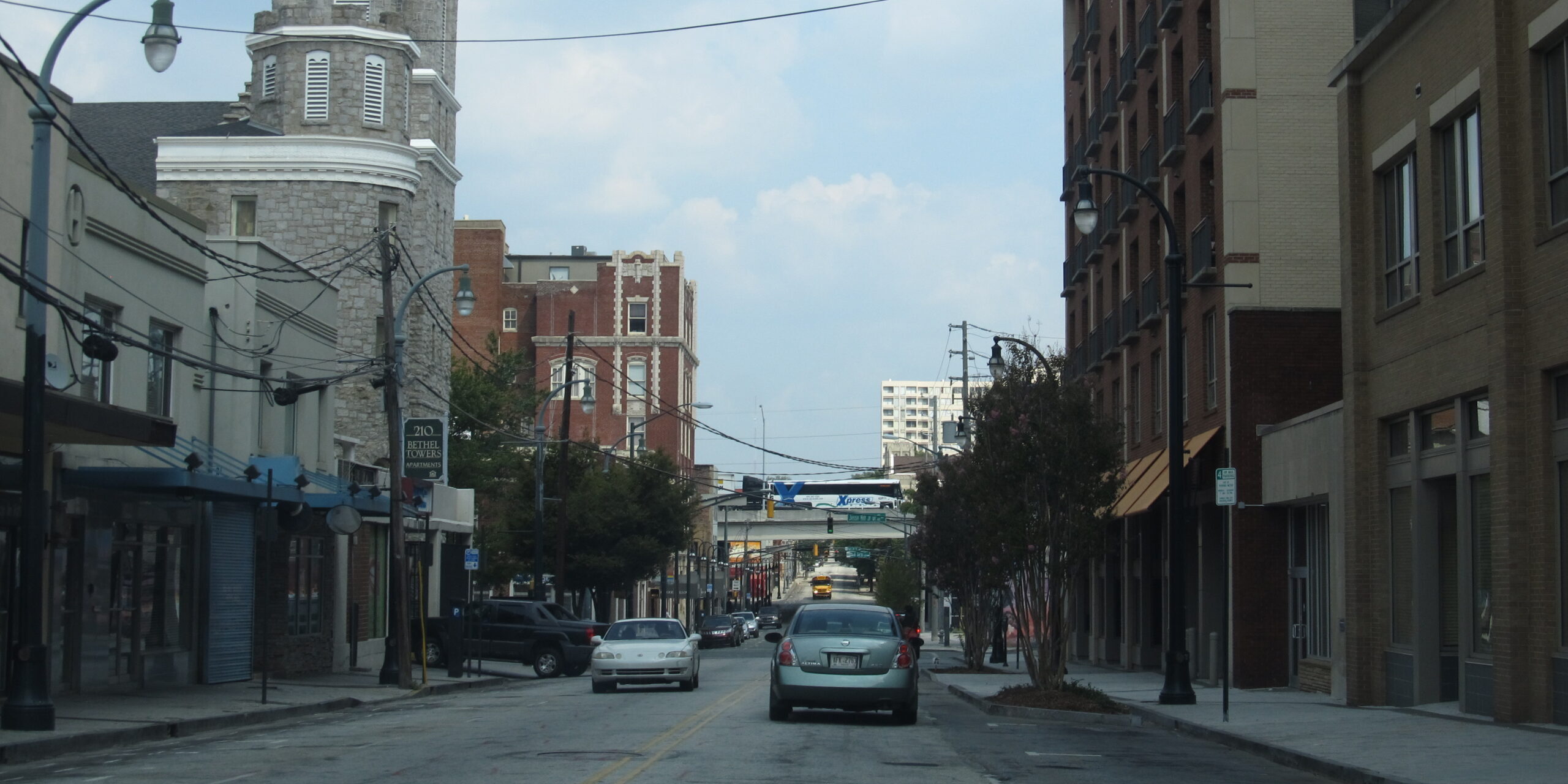
Republican gubernatorial nominee Rick Jackson unveiled a statewide proposal Wednesday to restore six historic Black business districts, led by Atlanta’s Sweet Auburn corridor, and expand assistance for small and minority-owned companies.
Jackson announced the Legacy Corridor Initiative at Selena S. Butler Park in southeast Atlanta. Its initial targets are Sweet Auburn; Augusta’s Golden Blocks; Savannah’s West Broad Street; Columbus’ Liberty District; Albany’s Harlem District; and Macon’s Cotton Avenue.
A dedicated state coordinator would align the University of Georgia Small Business Development Center’s 17 offices, helping entrepreneurs navigate licensing, secure financing and compete for state contracts. Jackson said Georgia should make it easier for businesses to bid and subcontract on government work.
The proposal promotes Georgia’s State Opportunity Zone Tax Credit. Eligible businesses can receive $3,500 per new job in designated redevelopment areas, with a two-job minimum, and apply credits against state income taxes and payroll withholding.
Jackson pledged to restore historic commercial buildings without displacing current residents or business owners. A 2021 National Park Service assessment found Sweet Auburn had lost 47% of its historic buildings since being designated a National Historic Landmark in 1976. It warned several prominent vacant properties remained vulnerable to deterioration or demolition.
That non-displacement emphasis overlaps with the Historic District Development Corporation, a neighborhood nonprofit whose preservation model prioritizes non-displacement, historic preservation and sustainability.
Major details remain unresolved. WRDW reported Jackson has not announced a total cost, explained how resources would be divided or detailed how businesses and property owners could apply. Democratic nominee Keisha Lance Bottoms had not released a corridor-specific alternative by Wednesday.
The plan broadens Jackson’s economic pitch before the November election. Its ultimate test will be whether the campaign framework becomes funded state policy capable of attracting investment without pricing existing communities out.